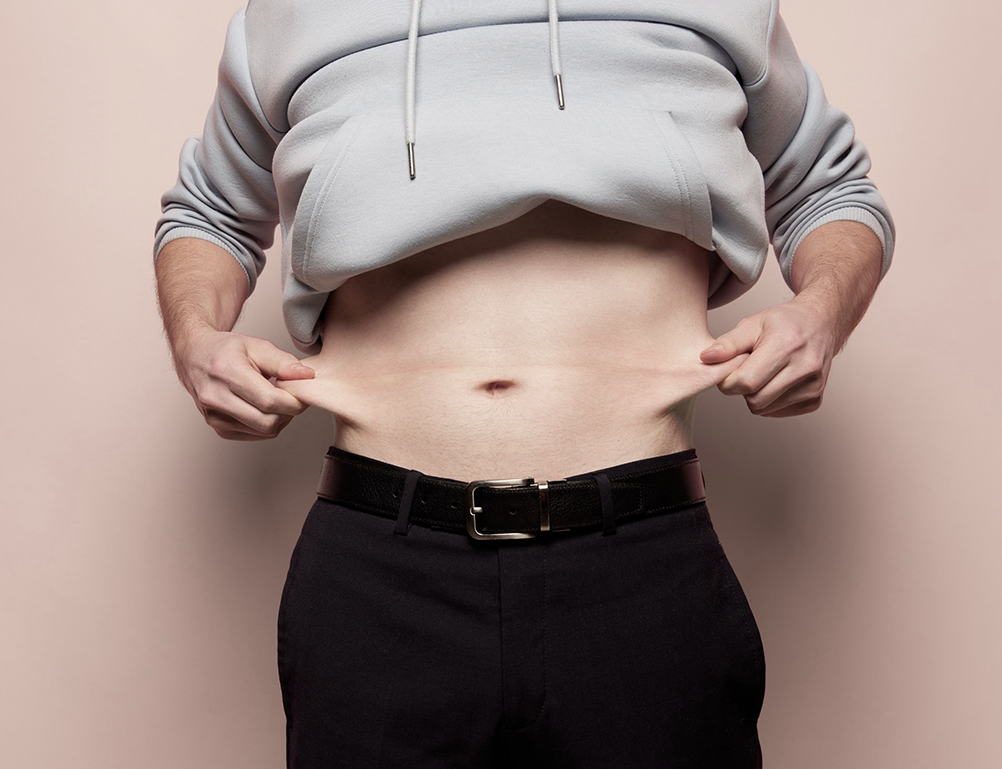
If You're Considering Surgery After Weight Loss...
Dramatic weight loss, whether achieved by proper nutrition and exercise, as the result of bariatric surgery, or from other forms of medical treatment, has many benefits. However, once you reach your weight loss goals, you may find that you still don’t have the fit and healthy body image you desire. Skin may be loose, sagging and in many cases, your body contours may appear irregular and disharmonious.
If you have undergone dramatic weight loss that has resulted in excess sagging skin, surgical body contouring may be right for you. In general, body contouring following major weight loss reduces excess fat and skin that has developed in multiple body areas. The result of surgery is a smoother, more attractive body contour. Body contouring surgery after major weight loss is an important and rewarding phase of your challenge to have a healthier, more proportionate body, and can help you further enhance your body image and self-confidence.

What is Body Contouring Surgery?
The condition of being significantly overweight can cause stress on your health in many ways. If your physical activity has been limited due to your overweight condition, you may have weak muscle and poor skin tone, and your skin may be severely stretched.
Bariatric surgery, in its various forms, is one method of major weight loss for individuals clinically defined as obese. Following weight reduction surgery, or any substantial weight loss, the skin and tissues often lack elasticity and cannot conform to the reduced body size. As a result, skin that has been severely stretched now is unsupported, and begins to sag in pockets that most commonly develop around these areas:
- Face, neck and jowls, resulting in a droopy, sad appearance
- Upper arms, resulting in a “bat-wing” appearance
- Breasts, causing them to flatten and hang with nipples pointing down
- Abdominal area, extending around the sides and into the lower back, resulting in an apron-like overhang
- Buttocks, groin and thighs, causing hanging pockets of skin
Weak and sagging skin that becomes macerated (wet or infected) is not only unattractive, it is also a serious threat to your health that should be treated.
Surgical body contouring after major weight loss improves the shape and tone of the underlying tissue that supports fat and skin, and removes excess sagging fat and skin. The result is a more normal body appearance with smoother contours. This is, in essence, the final phase of your total weight loss experience.
However, before you decide to undergo body-contouring surgery, it is important to understand that your weight loss must have stabilized. If you continue to lose weight, sagging pockets will redevelop. If you rapidly regain the weight you have lost, you will traumatically stress your already weakened and thin skin, causing further stress to the skin, visible stretch marks and wide scars.
If you have weight reduction surgery, your female plastic surgeon, Dr. Kiran Polavarapu, will work closely with your physician to determine when it is appropriate for you to begin body contouring.
In general, good candidates for body contouring are:
- Adults of any age whose weight loss has stabilized
- Healthy individuals who do not have medical conditions that can impair healing or increase surgery risks
- Non-smokers
- Individuals with positive outlook and realistic goals
- Individuals committed to leading a healthy lifestyle
Where do I begin?
A consultation with your plastic surgeon is the first step to learn how body contouring can help you achieve better health and an improved appearance. A consultation is designed to fully educate you about surgery in a non-pressured environment, and will include:
- A discussion of your goals and an evaluation of your individual case
- The options available in body contouring
- The likely outcomes of body contouring and any associated risks
- The course of treatment recommended by your plastic surgeon

Evaluation
Overall health and personal outlook can greatly impact the outcome of your surgery. These will be carefully evaluated in your consultation with your plastic surgeon. The success of your procedure, safety and overall satisfaction require that you honestly share your expectations, fully disclose your medical history and commit to following your surgeons instructions.
THE PROCESS
What to Expect With Surgery After Weight Loss
Your plastic surgeon will carefully explain your body-contouring plan. Prior to any surgery, you will be given specific instructions that may include information about diagnostic testing, medications, day of surgery instructions, anesthesia and post-operative care.
In addition, you will be asked to sign consent forms to assure your plastic surgeon that you fully understand the procedure(s) and any associated risks or potential complications. Possible risks of body contouring include bleeding, infection, fluid accumulation, delayed or poor healing, skin loss, blood clots, excessive or widened scars, numbness and other changes in skin sensation, and irregular or asymmetric scars. Any surgery carries risks associated with anesthesia. These risks and others will be fully discussed prior to your consent. It is important that you address all your questions directly with your plastic surgeon. It is natural to feel some anxiety, whether excitement for the anticipated outcomes or preoperative stress. Discuss these feelings with your plastic surgeon.
Body contouring procedures may be performed in your surgeon’s accredited office-based surgical facility, an ambulatory surgical facility or hospital, possibly with an overnight hospital stay. Procedures are most commonly performed under general anesthesia, although local anesthesia with sedation may also be used. These decisions will be based on the requirements of your specific procedure and considerations of patient and surgeon preference. Your surgeon and the assisting staff will fully attend to your comfort and safety.
The procedures necessary to achieve your goals will be defined along with a plan for the timing of these procedures. Plastic surgery procedures that may be recommended by your physician include:
- Lower body lift: to correct sagging of the abdomen, buttocks, groin and outer thighs
- Breast lift: to correct sagging, flattened breasts
- Arm lift: to correct sagging of the upper arms
- Thigh lift: to correct sagging of the inner, outer and mid thigh
Medications are administered for your comfort during the surgical procedures. The choices include intravenous sedation and general anesthesia. Your doctor will recommend the best choice for you.
All body contouring procedures require incisions to remove excess skin. In many cases, these incisions may be extensive. Incision length and pattern depend on the amount and location of excess skin to be removed, as well as personal preference and your doctor’s surgical judgment.
Advanced techniques usually allow incisions to be placed in strategic locations where they can be hidden by most types of clothing, but this is not always the case.
Body contouring is often performed in stages. Your particular condition and goals, as well as your plastic surgeon’s best judgment, will all influence how your doctor defines a surgical plan. While it may have taken you two years or more to lose all the excess weight, it may take equally as long for the results of your body contouring to be complete.
A complete lower body lift treats sagging buttocks, abdomen, waist, hips and outer thighs in one procedure or in staged procedures. Incision patterns vary, and may include a circumferential incision around the body to remove the “belt” of excess skin and fat.
The incision patterns for lifting a woman’s sagging breasts will be determined based on the amount of excess skin to be removed.
These may include one or a combination of incisions in a circular pattern around the areola, in a line extending from the areola to the breast crease, and horizontally along the breast crease.
A breast implant also may be recommended to enhance breast shape and size.
Sagging skin in the upper arms is treated with an incision from the underarm area extending along the inside or back of the upper arm. Additional incisions on the arms may be necessary anywhere excess skin has formed sagging pockets.
The smoother, tighter contours that result from upper arm contouring are apparent almost immediately, although initially obscured by swelling and bruising. In addition, skin quality is dramatically improved in both appearance and texture.
Reshaping of the thighs is achieved through incisions in the groin that can extend downward to the knee along the inner portion of the thigh.
Improving contours of the outer thigh may require an incision extending from the groin around the hip. Through these incisions your plastic surgeon will tighten tissues for a smoother, better toned thigh.
Once your procedures are completed, dressing or bandages may be applied to your incisions. Areas of the body that have been treated may be wrapped in an elastic bandage to minimize swelling and support your new contours as you heal. Small, thin tubes may be temporarily placed under the skin to drain excess fluid or blood that may collect. Before you are released, you and your accompanying caregiver will be given specific instructions that may include:
- How to care for the surgical site and drains
- Medications to apply or take orally to aid healing and reduce infection risk
- Specific concerns to look for at the surgical site or in your general health
- When to follow up with your plastic surgeon
Progress and Healing
Initial healing will include swelling at the incision sites. Discomfort is common and can be controlled with medication. You will be instructed to return to light walking as soon as possible to minimize the potential for blood clots and other complications.
You may be instructed to avoid bending, straining or lifting for several days to weeks. Where tightening of the abdomen or thighs is involved, your plastic surgeon may also instruct you to avoid standing fully upright and stressing any internal sutures as they heal, and to sleep with pillows elevating your knees. Follow all instructions carefully – this is essential to the success of your outcome.
Initial wound healing may take 7 to 14 days, after which time sutures will be removed if necessary. You will be ready to return to work and normal activity in a few weeks, so long as you do not engage in any heavy lifting or vigorous exercise.
Healing will continue for many weeks as swelling resolves and incision lines continue to improve. Numbness and a firm feeling over the skin’s surface will improve over time. Once you have completely recovered from one series of procedures, it may be time to begin preparation for additional procedures in other body areas.
The results of a body contouring following major weight loss are visible almost immediately; however, it may take as long as one to two years or more for the final results of all the recommended procedures to be fully appreciated. Visible scars are something you must accept in your goals to achieving a body contour that matches your new body weight and proportion. The results are long lasting, provided that you maintain a stable weight and general fitness. As your body ages, it is natural to lose some firmness, but most of your initial improvement should be relatively permanent.