
If You’re Considering Breast Reduction…
Women with very large, overly full, or pendulous breasts often feel that their chest dominates their appearance, making it difficult to achieve a balanced, proportionate silhouette. Many find that their breast size limits clothing options, affects posture or confidence, and draws unwanted attention that can impact social comfort or self-image.
Breast reduction, technically known as reduction mammaplasty, is an aesthetic procedure designed to help women (and teenage girls) achieve a smaller, more refined breast shape that better complements their natural body proportions. By removing excess fat, glandular tissue, and skin, the surgery creates breasts that appear lighter, more lifted, and beautifully contoured. The procedure can also refine the size and shape of the areola for a more harmonious overall look.
If you’re considering breast reduction in Fort Worth, this will give you a basic understanding of this breast surgery procedure - when it can help, how it’s performed, and what results you can expect. It can’t answer all of your questions, since a lot depends on your individual circumstances. Please be sure to ask your doctor if there is anything about the procedure you don’t understand.

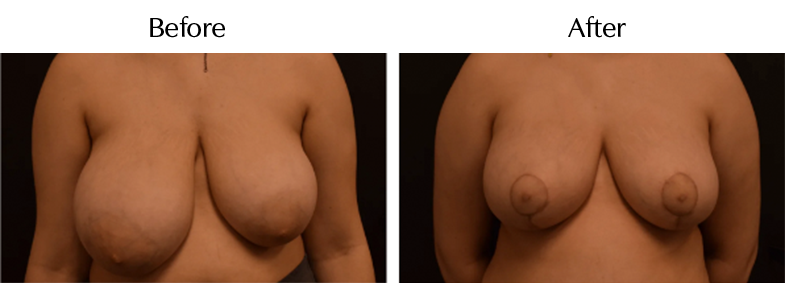
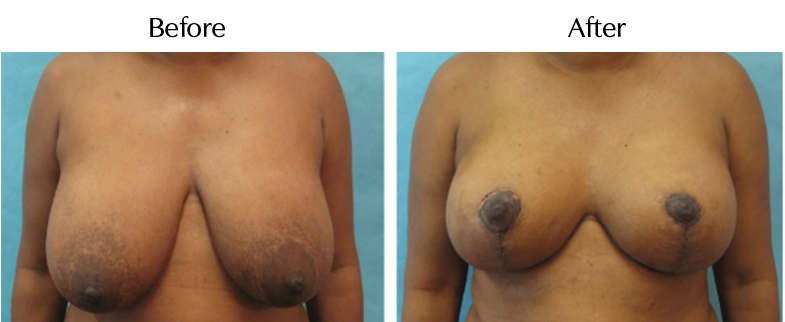
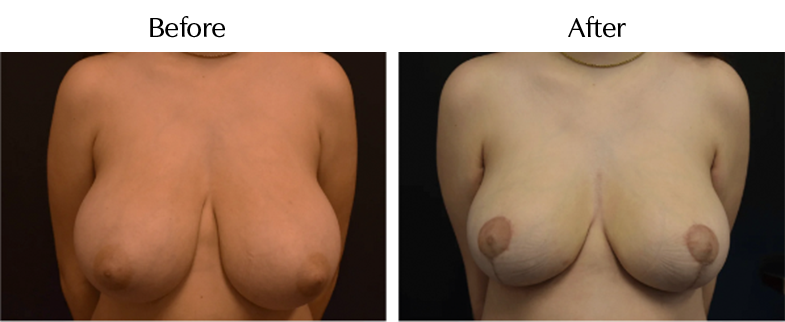
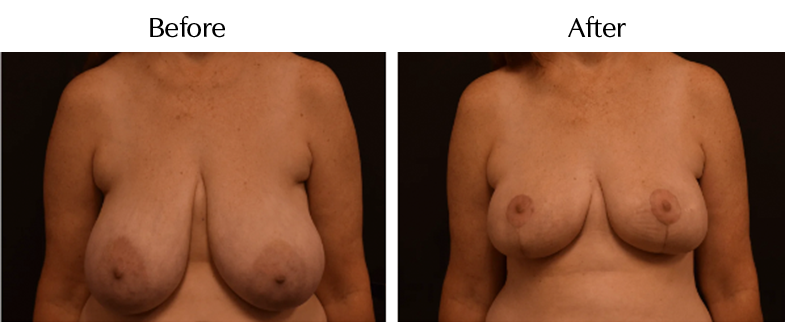
Fort Worth Breast Reduction Before & After Photos
Some of our favorites
The Best Candidates for Breast Reduction
Breast reduction is usually performed for physical relief rather than simply cosmetic improvement. Most women who have breast reduction surgery are troubled by very large, sagging breasts that restrict their activities and cause them physical discomfort.
In most cases, breast reduction isn’t performed until a woman’s breasts are fully developed; however, it can be done earlier if large breasts are causing serious physical discomfort. The best candidates are those who are mature enough to fully understand the procedure and have realistic expectations about the results. Breast reduction is not recommended for women who intend to breast-feed.

All Surgery Carries Some Uncertainty and Risk
Breast reduction is not a simple operation, but it’s normally safe when performed by a qualified Fort Worth female plastic surgeon. Nevertheless, as with any surgery, there is always a possibility of complications, including bleeding, infection, or reaction to the anesthesia. Some patients develop small sores around their nipples after surgery; these can be treated with antibiotic creams. You can reduce your risks by closely following your physician’s advice both before and after surgery.
Breast reduction procedure does leave noticeable, permanent scars, although they’ll be covered by your bra or bathing suit. (Poor healing and wider scars are more common in smokers.) Breast reduction can also leave you with slightly mismatched breasts or unevenly positioned nipples. Future breast-feeding may not be possible, since the surgery removes many of the milk ducts leading to the nipples.
Some patients may experience a permanent loss of feeling in their nipples or breasts. Rarely, the nipple and areola may lose their blood supply and the tissue will die. (The nipple and areola can usually be rebuilt, however, using skin grafts from elsewhere on the body.)
The Breast Reduction Surgery Process
What to Expect With Breast Reduction
After Your Breast Reduction Surgery
Post-Surgical expectations
After your breast reduction, you’ll be wrapped in an elastic bandage or a surgical bra over gauze dressings. A small tube may be placed in each breast to drain off blood and fluids for the first day or two. Your surgeon will give you post-operative care instructions to promote healing and reduce the risk of complications.
You may feel some pain for the first couple of days-especially when you move around or cough-and some discomfort for a week or more. Your surgeon will prescribe medication to lessen the pain.
The bandages will be removed a day or two after surgery, though you’ll continue wearing the surgical bra around the clock for several weeks, until the swelling and bruising subside. Your stitches will be removed in one to three weeks.
If your breast skin is very dry following surgery, you can apply a moisturizer several times a day, but be sure to keep the suture area dry.
Your first menstruation following surgery may cause your breasts to swell and hurt. You may also experience random, shooting pains for a few months. You can expect some loss of feeling in your nipples and breast skin, caused by the swelling after surgery. This usually fades over the next six weeks or so. In some patients, however, it may last a year or more, and occasionally it may be permanent.

Fort Worth Breast Reduction FAQs
Have a specific question? Contact us!