
What are Dermal Fillers?
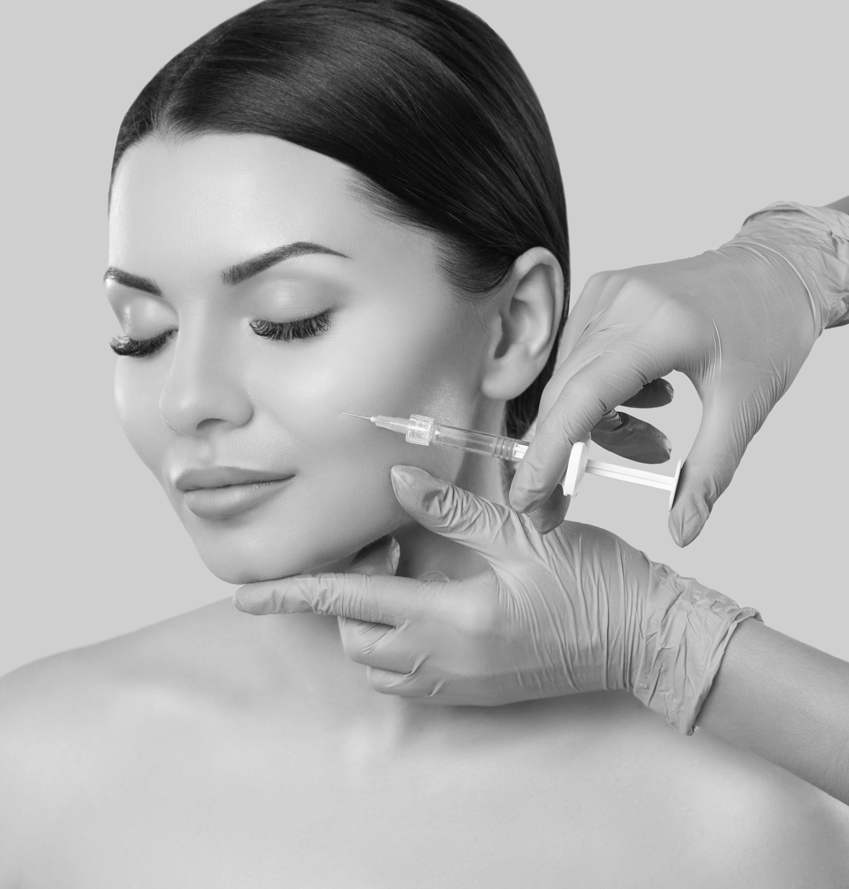
If you’d like to restore youthful fullness to your face, enjoy plump lips, enhance shallow contours or soften those facial creases and wrinkles, dermal fillers may be the answer. Dermal fillers have been called “liquid facelifts” because they offer many of the benefits of a surgical facelift without the downtime.
Although they can’t help with excess sagging skin, these soft tissue fillers can add more volume and provide immediate results at a lower cost than surgery. These treatment aren’t permanent, however, and they must be repeated and maintained.
As a board-certified female plastic surgeon in Fort Worth, Dr. Polavarapu often recommends dermal fillers alongside other skin rejuvenation treatments, including Botox injections. Together, these options can help enhance your natural beauty. During your consultation, Dr. Polavarapu will assess your unique needs and suggest a tailored combination of treatments to help you achieve your desired results.
Are Injectable Fillers Right for You?
Dermal fillers are wonderful to rejuvenate your appearance, but they can’t stop the aging process. If you want a permanent solution, talk to your doctor about a facelift, brow lift or eye lift.
Some people opt to have a liquid facelift, delaying the time when a surgical facelift is more appropriate.
It’s a great way to see some impressive changes and improvements in your appearance, such as the reduction of forehead wrinkles, until you’re ready for a permanent surgical option.
Just remember, you’ll need to have repeat treatments with dermal fillers as a wrinkle treatment to maintain that fresh, full new look.
Temporary Fillers
Human fat, also known as autologous fat, is harvested from your own body. Using your own fat requires a more extensive procedure than other injectable fillers because you first must undergo liposuction to extract the fat prior to injection. You eliminate the risk of allergic reaction or rejection by the body by using your own fat. You should know that not all of the live fat cells survive when transplanted into a new site. You can expect a fairly high rate of re-absorption. Because of this, your doctor will likely overfill the area being treated. At first you might look abnormal, but it will soon settle and you’ll enjoy a new look. When your doctor extracts this fat via liposuction, it’s possible that there will be more than is needed for one application. Most natural fat can be stored for touch-ups.
Hyaluronic acid is also a natural substance found in your body. High concentrations are found in soft connective tissue and in the fluid surrounding your eyes. It’s also in some cartilage and joint fluids, as well as skin tissue. If the name sounds familiar, it’s because the same substance is often injected into the aching joints of people with arthritis to ease pain by providing extra cushioning. Hyaluronic acid is not derived from animal sources. Brand names include: Captique, Esthélis, Elevess, Hylaform, Juvéderm, Perlane, Prevelle, Puragen and Restylane.
When injected beneath the skin, these fillers plump up creased and sunken areas of the face. They can also add fullness to the lips and cheeks. Injectable fillers may be used alone or in conjunction with a resurfacing procedure, such as a laser treatment, or a recontouring procedure, such as a facelift.
Planning for Treatment
Facial rejuvenation is very individualized. That’s why it’s important to discuss your hopes and expectations with a board-certified plastic surgeon who has experience with many different types of surgical and non-surgical facial procedures.
In your initial consultation, your plastic surgeon will evaluate your face – the skin, the muscles and the underlying bone – and discuss your goals for the surgery. Your doctor will help you select a treatment option based on your goals and concerns, your anatomy and your lifestyle.
Your surgeon will ask you about your medical history, drug allergies, and check for conditions that could cause problems, such as active skin infections or non-healed sores from injuries.
Insurance usually doesn’t cover cosmetic procedures. However, if your injectable treatment is being performed to treat a scar or indentation from an accident or injury, you may be reimbursed for a portion of the cost. Check with your insurance carrier to be sure.
Injectables are usually administered in a surgeon’s office-based facility. If, however, you are being hospitalized for a facelift, neck lift, brow lift, or any other procedure, your injections may be administered in the hospital as well.
THE PROCESS
What to expect with dermal fillers

Risks Related to Injectables
When injectables are administered by a qualified plastic surgeon, complications are infrequent and usually minor in nature. Still, individuals vary greatly in their anatomy, their physical reactions and their healing abilities. The outcome of treatment with injectables is never completely predictable.
Hyaluronic Acid: side effects are typically mild or moderate in nature and last for less than 7 days. Adverse events include redness, pain, firmness, swelling, lumps/bumps, bruising, itching, and discoloration.
Risks not necessarily related to allergies include infection, abscesses, open sores, skin peeling, scarring and lumpiness, which may persist over the treated area. Reports of these problems are very rare.
Fat: Allergic reaction is not a factor for fat because it’s harvested from a patient’s own body. However, there is still a small risk of infection and other infrequent complications.
Dermal Fillers Fort Worth FAQs